


10 Signs Brake Repair
-
Squeak, Squeal, or Grind: Noise is a Major Warning
The first sign that your brake pads are wearing out is almost always a sound. Understanding the different types of noise will help you gauge the urgency of the problem.
Squeaking or High-Pitched Squealing
This is typically caused by the wear indicator on your brake pads. It’s a small metal shim designed to rub against the rotor, creating a loud, high-pitched noise to let you know the pads are getting thin and need replacement soon. This is a common and relatively easy fix for a qualified mechanic.
Metallic Grinding
This is a serious red flag. A grinding sound means your brake pads have worn completely thin, and the metal backing plate of the pad is now scraping directly against the metal rotors. This metal-on-metal contact causes rapid, irreversible damage to the rotors, transforming a simple pad replacement into a much costlier pad and rotor replacement. If you hear grinding, stop driving and seek car service immediately.
-
Vibration or Pulsation in the Pedal: Don’t Ignore the Odd Feeling
When you apply the brakes, you should feel a smooth, consistent slowdown. If you notice the brake pedal or the steering wheel shaking, pulsing, or vibrating, it’s a strong indicator that you have warped rotors.
In the intense heat of the Avondale, AZ summer, your rotors get extremely hot. If they cool unevenly—say, by hitting a puddle on a rainy West Valley street or through hard, repeated braking—the metal can warp. Warped rotors don't provide a smooth surface for the pads to grip, causing the shuddering sensation. Addressing this quickly is vital for maintaining responsive, reliable braking. Your auto repair specialist at Earnhardt Hyundai Avondale will likely recommend resurfacing or replacing the rotors.
-
Soft, Spongy, or Low Brake Pedal
The feel of your brake pedal is crucial. It should feel firm, responsive, and easy to modulate. A change in pedal feel often signals an issue in the hydraulic system that transmits the stopping force.
Spongy or Soft Pedal
If the pedal sinks easily or feels "mushy" when you press it, you may have air or moisture in your brake lines. Brake fluid is a hydraulic liquid, and air bubbles or moisture compromise its ability to transfer pressure, leading to severely reduced stopping power.
How-Low-Can-You-Go Pedal
If you have to press the pedal almost to the floor before the car begins to slow down, it could indicate low brake fluid due to a leak, or severely worn brake pads. Both require prompt attention from a professional mechanic.
-
Your Vehicle Pulls to One Side When Braking
When all brake components are working correctly, your vehicle will stop in a straight line. If you feel your car or truck suddenly pull to the left or right when braking, it's often a sign of uneven braking force.
This issue is typically caused by a stuck or seized brake caliper, which applies too much or too little pressure to a wheel. It could also be the result of a restricted brake hose or unevenly worn brake pads. While this issue is often related to the braking system, it can also be a sign of a deeper issue with your vehicle's steering and suspension.
Never ignore a pulling sensation, as it drastically compromises your ability to maintain control during an emergency stop on busy Phoenix area roads. Call Earnhardt Hyundai now to schedule an appointment or use our online scheduling tool.
-
Illuminated Warning Light on Your Dashboard
Modern vehicles are equipped with sophisticated sensor systems to monitor your brakes. If the brake warning light (often a circle with an exclamation mark or the word "BRAKE") illuminates on your dashboard, it’s a clear call to action. Another relevant dash light may be yellow or amber, lighting up the letters ABS inside of a circle.
If any braking light stays on after you’ve released the parking brake, it usually points to a low level of brake fluid or a problem with the anti-lock brakes (ABS). Since low fluid typically means there’s a leak somewhere in the system, you should book an appointment for brake repair in Avondale immediately.
-
Burning Chemical Smell
If you detect a sharp, pungent chemical smell after a few hard stops, you are likely smelling overheated brakes. This usually happens after continuous or aggressive braking (like driving down a long, steep grade).
A burning smell is the friction material of the brake pads getting too hot—a condition known as "brake fade." If you experience this, pull over and allow your brakes to cool. Our hot desert summers can add to the problem.
If the smell persists during normal driving around Avondale, it could mean a caliper is stuck, causing the pads to drag continuously. This constant friction will quickly ruin your brake pads and rotors. Act quickly to prevent further damage. Find hours and directions for your nearby Hyundai dealership.
-
Increased Stopping Distance
This is one of the most dangerous signs because it develops gradually, making it easy to overlook. If you find yourself consistently pressing the brake pedal earlier and harder than you used to, it means your brakes are losing effectiveness.
Whether the problem is worn brake pads, a lack of brake fluid, or an issue with your suspension, an increased stopping distance is a critical safety issue. Don't wait until you're in a pinch on the highway to realize your stopping distance is too long. If your vehicle isn't stopping like it used to, it's time to have a certified mechanic perform a comprehensive brake system inspection.
Tip: If your Hyundai model is still eligible for the 5-year/60,000-mile Limited warranty, please reach out to our staff with any warranty-related questions.
-
Unexpected Activation of Traction or Stability Control
Modern vehicles utilize the brake system for several important automated systems. Traction Control and Electronic Stability Control work by automatically applying individual-wheel brakes to keep your vehicle on its intended path.
If your Traction Control or stability warning light flashes unexpectedly, it can be a sign of a brake-related problem. This often points to faulty wheel speed sensors (which are critical for both ABS and ESC), or uneven hydraulic pressure being applied across the system. Since precise brake modulation is critical, any underlying brake issue can compromise the very safety features designed to prevent skids and loss of control. If these lights are activating without reason, your car requires diagnostic brake repair.
-
Hyundai Maintenance Schedule
One of the most proactive ways to prevent the eight signs above is simply adhering to your vehicle's maintenance schedule. While noises and vibrations are reactive signs, the maintenance schedule provides a roadmap for preventative care.
Your manufacturer or auto repair professional recommends specific intervals not just for oil changes, but also for brake fluid flushes and brake system inspections. Brake fluid absorbs moisture over time, which lowers its boiling point and causes internal corrosion—especially important in hot, dusty areas like Avondale.
Regularly inspecting your entire brake system, from the pedal to the calipers, ensures that minor wear on your rotors or brake pads is caught early, long before it becomes an audible or dangerous problem. This proactive approach saves you money and guarantees peak safety performance.
-
Just Bought a Used Vehicle Without Recent Service Records
If you have recently purchased a used car, truck, or SUV from another person or a non-brand used car dealership, the most important step you can take is an immediate brake system inspection. This is especially true if your purchase didn’t come with verified car service records detailing recent maintenance.
Used vehicles often have brake components that are near the end of their lifespan, such as thin brake pads or heavily grooved rotors. The previous owner may have ignored the maintenance schedule. Having a full inspection of the brake components, including the condition of the brake fluid and the operation of the calipers, is a small investment that provides huge peace of mind when driving on the busy freeways around Avondale.
Important: Don't assume the brakes are fine—have a professional mechanic confirm it.
Schedule Your Expert Brake Repair in Avondale, AZ
The brake system is intricate, relying on coordinated components like the master cylinder, brake lines, calipers, pads, and rotors. For drivers in the West Valley area, routine maintenance is the best defense against major auto repair costs in Avondale.
Don’t put your safety at risk. If your car, truck, or SUV—regardless of the make or model—is exhibiting any of these signs, trust your local, experienced car service professionals.
Need brake repair in Avondale, Litchfield Park, or the surrounding area? Head to Earnhardt Hyundai in Avondale. Our skilled technicians have the advanced tools and knowledge to diagnose and fix everything from a simple brake pad replacement to a complex hydraulic system repair, ensuring your vehicle remains safe and reliable on the Arizona roads.
Earnhardt Hyundai
Address
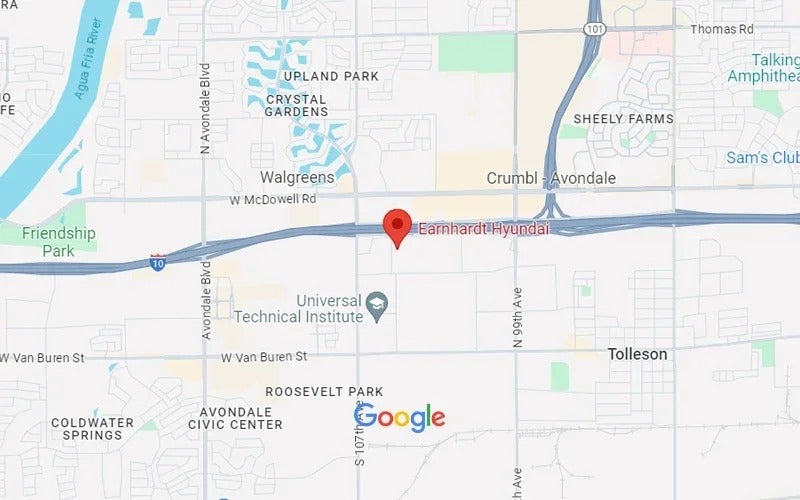
10401 W Papago Fwy
Avondale, AZ 85323
Phone
- Sales 623-220-4141
- Service 623-220-4150
- Parts 623-220-4152
| Monday | 8:00AM - 9:00PM |
| Tuesday | 8:00AM - 9:00PM |
| Wednesday | 8:00AM - 9:00PM |
| Thursday | 8:00AM - 9:00PM |
| Friday | 8:00AM - 9:00PM |
| Saturday | 8:00AM - 8:00PM |
| Sunday | 10:00AM - 6:00PM |
| Monday | Closed |
| Tuesday | 7:00AM - 6:00PM |
| Wednesday | 7:00AM - 6:00PM |
| Thursday | 7:00AM - 6:00PM |
| Friday | 7:00AM - 6:00PM |
| Saturday | 7:00AM - 4:00PM |
| Sunday | Closed |
| Monday | Closed |
| Tuesday | 7:00AM - 6:00PM |
| Wednesday | 7:00AM - 6:00PM |
| Thursday | 7:00AM - 6:00PM |
| Friday | 7:00AM - 6:00PM |
| Saturday | 7:00AM - 4:00PM |
| Sunday | Closed |