


Personalized Maintenance Calendar
The Importance of Goodyear AZ Car Maintenance
Arizona's extreme conditions create intensive maintenance needs for all vehicles, regardless of brand. However, Hyundai owners have particular advantages in addressing these challenges through their industry-leading warranty coverage and comprehensive service support. Creating a personalized maintenance calendar helps you leverage these benefits while adapting to West Valley's unique driving environment.
At Earnhardt Hyundai, we work with West Valley drivers to create custom maintenance schedules that protect their investments in Arizona's extreme climate. From the dusty construction zones along Buckeye Road to the stop-and-go traffic merging onto Loop 101, your Goodyear Hyundai faces unique challenges that standard maintenance intervals may not address.
Whether you're commuting daily from Avondale to downtown Phoenix via I-10 or running weekend errands around Goodyear's Estrella Mountain area, your personalized Hyundai maintenance calendar should take into account your actual driving lifestyle.

Step 1: Understanding Your West Valley Driving Habits
Creating your personalized Hyundai maintenance calendar starts with honestly assessing Avondale and Goodyear driving challenges. This assessment helps determine whether time-based or mileage-based maintenance intervals better suit your specific situation.
Daily Driving Patterns: Long Commutes or Short-Distance Sprints
Your commute distance significantly impacts maintenance timing. For instance, daily commuters traveling from Avondale to downtown Phoenix cover 25-30 miles each way, accumulating 12,000-15,000 commute miles annually. These drivers need to strictly adhere to mileage-based maintenance schedules while keeping in mind Arizona's heat still accelerates certain service needs regardless of distance traveled.
Local drivers who rarely leave the Avondale-Goodyear area might only accumulate 8,000-12,000 miles annually but face different challenges. Frequent short trips prevent engines from reaching optimal operating temperatures, making time-based oil changes more critical than mileage accumulation. Examples of these short trips include parent taxi duties between home and school or errands such as visits to Estrella Falls shopping center.
Route types also matter significantly. Highway commuters on I-10 toward Phoenix experience different wear patterns than drivers navigating surface streets like Litchfield Road or Indian School Road. Unimpeded highway driving allows engines to operate efficiently, while stop-and-go surface street driving creates more stress on cooling systems and transmissions.
Traffic exposure affects maintenance timing, particularly for cooling systems and A/C components. Rush hour traffic on I-10 between Avondale and downtown Phoenix means extended periods of low-speed, high-temperature operation. Your Hyundai's cooling system works harder during these periods, potentially requiring more frequent coolant system attention.
Environmental Factors: Open-Air Parking, Dusty Conditions
Where you park makes a substantial difference in your personalized maintenance calendar. Covered garage parking protects your Hyundai from UV damage and reduces interior temperature extremes, potentially extending service intervals for certain components. Carport parking provides partial protection, while street parking in direct Arizona sun accelerates wear on belts, hoses, and interior components.
Work location impacts your vehicle's exposure to harsh conditions. Outdoor job sites in Avondale's industrial areas expose vehicles to more dust and debris than air-conditioned office parking. Construction workers, landscapers, and outdoor professionals often need more frequent air filter replacements and cooling system attention.
Seasonal usage patterns affect maintenance timing, particularly for weekend drivers or retirees who might drive less during summer months. These drivers should prioritize time-based maintenance since heat stress occurs even when parked.
Dust exposure varies significantly across the West Valley. Areas near agricultural zones south of Goodyear or active construction sites along the I-10 corridor subject vehicles to more airborne particles, necessitating more frequent air filter changes regardless of mileage.
Vehicle-Specific Considerations: Age, Style and More
Your vehicle make and model affect maintenance scheduling. Newer models with advanced cooling systems might handle Arizona heat better than older vehicles, while certain turbocharged engines require more frequent oil changes in extreme conditions.
High-mileage vehicles need more attention to cooling systems and belts, regardless of annual mileage accumulation. Many drivers notice their fuel economy is slipping, and that’s a sign that maintenance is needed. Timely intervention can improve gas mileage, according to the US Department of Energy guidelines.
Previous maintenance history influences your personalized calendar. If your vehicle is way behind on service, it might need intensive catch-up maintenance before establishing regular intervals.
Warranty status affects service decisions. Vehicles under factory warranty must maintain manufacturer intervals at a minimum, but Arizona's severe conditions often justify more frequent maintenance visits.

Your Driving Profile: Maintenance Calendars for Every West Valley Lifestyle
Based on your assessment, you'll likely fit into one of four primary driving profiles common in the Avondale and Goodyear AZ area. Each profile suggests a different approach to maintenance scheduling that balances Arizona's harsh conditions with your specific usage patterns.
The Daily Commuter (Avondale ↔ Phoenix)
If you're among the thousands of West Valley residents who commute daily to downtown Phoenix, Tempe, or Scottsdale, you accumulate significant highway miles while enduring extended A/C usage and heat stress. Your personalized maintenance calendar should emphasize cooling system reliability and frequent A/C attention.
Oil Changes: Every 4 months OR 7,500 miles, whichever comes first. Arizona heat accelerates oil breakdown even during highway driving, and your extended daily A/C usage creates additional engine stress. January, May, and September oil changes align perfectly with Arizona's temperature cycles, ensuring fresh oil before and after peak summer heat.
A/C Service: Bi-annual maintenance with pre-summer comprehensive service in March and mid-season inspection in July. Daily commuters depend on A/C reliability more than any other driver type, making system maintenance absolutely critical. Your extended daily usage justifies more frequent attention than weekend drivers.
Tire Rotation: Every 5,000 miles due to consistent highway wear patterns. Daily commuters accumulate even wear across all tires, making regular rotation highly effective for extending tire life. Highway driving also heats tires consistently, making pressure monitoring particularly important.
Coolant Inspection: Every 6 months with comprehensive system service annually. Your daily commute subjects the cooling system to extended operation periods, particularly during summer months when ambient temperatures exceed engine operating temperatures for hours daily.
Battery Testing: Every 4 months during summer season (May through September). Daily A/C usage combined with extended operation periods stresses batteries significantly. Commuters can't afford battery failure during peak summer commuting periods.
For example, if you commute from Avondale to downtown Phoenix, your typical schedule might be: January oil change and battery test, March A/C service, May oil change and coolant check, July A/C inspection and tire rotation, September oil change and battery test, November general inspection and winter preparation.
The Local Navigator (Avondale/Goodyear Area)
Local drivers who primarily stay within the West Valley face different challenges than commuters. Your trips to Walmart Supercenter on Yuma Road, visits to Estrella Mountain Regional Park, or errands around Goodyear's Civic Square involve frequent short trips that prevent engines from reaching optimal operating temperatures.
Oil Changes: Every 3-4 months regardless of mileage. Short trips don't allow engines to reach temperatures that evaporate moisture from oil, and frequent cold starts create more wear than sustained highway driving. Time becomes more important than mileage for local drivers.
Air Filter: Every 8 months instead of annual replacement. Local driving exposes vehicles to more dust from frequent stops, construction zones, and agricultural areas. Spring and fall replacement works well for most local drivers.
Brake Inspection: Every 8 months due to stop-and-go wear patterns. Local driving involves more frequent braking than highway commuting, and Arizona heat affects brake fluid more rapidly during frequent use.
Fuel System: Annual cleaning service becomes important because short trips cause carbon buildup that longer drives would normally prevent. Local drivers benefit from fuel system attention that commuters rarely need.
Transmission Service: Time-based intervals become more important than mileage. Local driving stresses transmissions differently than highway use, with more frequent gear changes and less cooling airflow.
A typical local navigator schedule might include: February oil change, June oil change and air filter, October oil change and brake inspection, with annual fuel system and transmission attention during moderate weather periods.
The Weekend Warrior
Weekend drivers accumulating 3,000-8,000 miles annually face unique maintenance challenges. Your Hyundai might sit unused during the work week, then handle recreational drives to Lake Pleasant, shopping trips to Westgate Entertainment District, or visits to family in other parts of the Valley.
Oil Changes: Every 4-6 months regardless of mileage. Time becomes the primary factor since heat stress occurs even when parked, and infrequent driving doesn't accumulate enough miles to trigger mileage-based intervals.
Battery Maintenance: Monthly checks during extended storage periods, particularly if you park outdoors. Arizona heat affects parked vehicles significantly, and infrequent driving doesn't provide adequate charging cycles.
Fuel Stabilizer: Use during extended non-use periods, particularly summer months when you might avoid driving during peak heat. Ethanol-blend fuels deteriorate rapidly in Arizona heat and humidity.
Pre-Drive Inspection: Before long trips or after extended storage periods. Weekend warriors often transition from daily short trips to occasional longer drives, requiring system checks before demanding use.
Seasonal Preparation: Intensive service before summer and winter seasons. Since you drive less frequently, comprehensive seasonal preparation becomes more important than frequent minor maintenance.
Weekend warriors might follow a schedule like: March comprehensive pre-summer service, June oil change and system check, September post-summer inspection and oil change, December winter preparation and battery service.
The Road Trip Enthusiast
If you're among West Valley residents who use their Hyundai for regular trips to California beaches, Colorado mountains, or other Southwest destinations, your maintenance calendar must account for variable conditions and high-stress driving periods.
Pre-Trip Inspection: Before any journey over 500 miles. Road trip enthusiasts subject their vehicles to diverse conditions that local driving doesn't duplicate, making comprehensive system checks essential.
Tire Rotations: Rotating tires regularly will extend their road life, helping keep your travel from impacting big budget items. As Car and Driver writes: “keep it even so that tires wear as evenly as possible.”
Accelerated Maintenance: Service 1,000 miles before major trips to ensure reliability during travel. This timing allows for follow-up repairs if issues are discovered during service.
Emergency Kit: Enhanced roadside preparation including extra fluids, tools, and emergency supplies. Road trip drivers face breakdowns far from familiar service providers.
Post-Trip Assessment: Inspection after challenging drives, particularly mountain or desert travel that stresses cooling systems and brakes differently than local driving.
Fluid Top-offs: More frequent checks during travel season when you're putting unusual demands on various systems.
Road trip enthusiasts need flexible schedules based on travel plans: pre-summer comprehensive service before travel season, mid-summer inspection and service, post-travel season assessment, and winter preparation during off-season periods.

Adapting Your Schedule: Avondale & Goodyear's Seasonal Challenges
West Valley's seasonal conditions require specific adjustments to your personalized maintenance calendar. Understanding these seasonal patterns helps you time services for maximum effectiveness and reliability. Make sure your oil changes are on time, regardless of the weather!
Pre-Summer Preparation (March-April)
Before temperatures consistently reach 100°F, your Hyundai needs comprehensive preparation for months of extreme operation. This timing allows for repairs or replacements before peak demand periods when service appointments become scarce and emergency repairs expensive.
A/C system comprehensive inspection and service becomes your highest priority. March service appointments allow time for parts ordering and repairs before summer heat arrives. Your A/C system will operate continuously for five months, making pre-season service absolutely critical.
Coolant system pressure testing and fluid refresh ensures your cooling system can handle extended high-temperature operation. Avondale and Goodyear drivers face some of the Valley's highest temperatures, making cooling system reliability essential.
Battery load testing should result in replacement if your battery is over two years old. Arizona heat provides no margin for weakening batteries, and summer electrical demands will stress any marginal battery beyond capacity.
Tire pressure baseline establishment becomes important because daily temperature swings will affect pressure significantly. Establishing proper baseline pressure during moderate temperatures helps you monitor changes throughout summer.
Hose and belt inspection for heat damage allows replacement before summer stress causes failures. Rubber components deteriorate rapidly in Arizona heat, making spring inspection and replacement particularly effective.
Summer Survival Mode (May-September)
During peak summer months, your personalized maintenance calendar shifts to monitoring and maintenance rather than major service. This period requires vigilance and quick response to developing issues.
Monthly tire pressure monitoring becomes essential due to daily temperature swings affecting pressure. Morning lows in the 80s and afternoon highs above 110°F can create 5-10 PSI pressure variations daily.
Coolant level verification should occur monthly during peak summer. Cooling systems operating at capacity may consume coolant more rapidly, and early detection prevents overheating incidents.
Battery terminal cleaning and protection helps maintain electrical connections during peak demand periods. Corrosion accelerates in heat and humidity, affecting electrical system reliability.
Air filter inspection becomes more frequent during monsoon season when dust storms can clog filters rapidly. A single haboob can require filter replacement regardless of previous service timing.
Wiper blade condition requires attention before sudden summer storms. Monsoon season brings intense but brief rainfall that demands effective windshield clearing.
Post-Summer Recovery (October-November)
After months of extreme heat stress, your Hyundai needs comprehensive assessment and recovery service. This timing allows evaluation of summer damage and preparation for moderate weather maintenance schedules.
Comprehensive system inspection should assess heat stress damage across all systems. Five months of extreme operation reveals weaknesses that moderate weather might not expose.
Battery replacement often becomes necessary after summer stress, even for batteries that performed adequately. October replacement avoids mid-summer failures and takes advantage of moderate installation weather.
Tire inspection for heat damage helps identify developing issues before they become safety concerns. Heat stress creates internal damage that might not be immediately visible.
A/C system post-season service addresses refrigerant loss and component wear from extended operation. October service timing allows repair scheduling before next summer's demands.
Interior restoration addresses UV damage accumulated during summer months. Dashboard protection, leather treatment, and interior component inspection help maintain vehicle value.
Winter Preparation (December-February)
Arizona's mild winters allow return to standard maintenance schedules while preparing for next summer's challenges. This period offers opportunities for major services and system rebuilds.
Standard maintenance schedules resume during moderate weather, allowing focus on mechanical wear assessment rather than heat stress management. Winter becomes ideal for transmission service, brake system rebuilds, and other major maintenance.
Planning for next summer's preparation includes budgeting for anticipated services and scheduling early appointments. December planning allows better service scheduling and cost management.

Stay on Track: Digital Tools for Your Personalized Schedule
Technology integration helps maintain your personalized Hyundai maintenance calendar effectively, particularly for West Valley drivers who balance multiple priorities and seasonal adjustments.
Hyundai Official Apps
The MyHyundai app provides service scheduling and maintenance tracking specific to your vehicle. Custom alerts based on your personalized schedule help maintain timing regardless of busy periods or travel schedules.
Integration with your dealership allows automated appointment scheduling and service reminders. Earnhardt Hyundai can input your personalized schedule and provide proactive service reminders.
Warranty tracking through official apps ensures your personalized schedule maintains manufacturer coverage while addressing Arizona's severe conditions.
Calendar Integration
Smartphone reminders for monthly maintenance checks help busy West Valley residents stay current with their personalized schedules. Monthly battery checks, tire pressure verification, and fluid level inspections become routine rather than forgotten tasks.
Seasonal preparation notifications provide advanced warning for major service periods. March A/C service reminders and October comprehensive inspection alerts help maintain schedule timing.
Mileage tracking apps monitor driving patterns and service needs, particularly useful for drivers whose patterns change seasonally or annually.
Dealer Partnership
Earnhardt Hyundai's custom service plans based on your driving assessment provide professional support for your personalized calendar. Our technicians understand West Valley driving conditions and can adjust recommendations based on your specific usage patterns.
Automated scheduling systems can implement your personalized calendar and provide proactive appointment reminders. This automation ensures service timing even during busy periods.
Digital service history tracking maintains records for warranty coverage and resale value documentation.

Smart Scheduling: Protecting Your Investment in West Valley Heat
Understanding the financial benefits of your personalized maintenance calendar helps justify the investment and demonstrates long-term value protection.
Budget Planning Strategies
Daily Commuters should budget $1,200-1,800 annually for maintenance due to higher frequency needs and cooling system demands. Extended A/C usage and highway miles create specific service requirements that exceed weekend driver needs.
Local Navigators typically need $800-1,200 annually with focus on time-based services rather than high-mileage components. Short trip patterns and moderate annual mileage create different cost structures than commuter drivers.
Weekend Warriors should plan $600-1,000 annually with emphasis on storage-related maintenance and seasonal preparation. Time-based service needs dominate despite lower mileage accumulation.
Road Trip Enthusiasts face variable costs of $1,000-1,500 annually depending on travel frequency and destinations. Pre-trip and post-trip services create irregular but essential expense patterns.
Preventive vs Reactive Costs
Arizona's extreme conditions make preventive maintenance more cost-effective than reactive repair approaches for all vehicles. A/C compressor replacement costs $1,500-2,500 but is preventable with annual service costing $150. As Kelley Blue Book writes, the mathematics strongly favor preventive care for all brands, including Hyundai.
Engine overhaul from coolant system neglect can cost $3,000-6,000, while regular coolant service costs approximately $120 annually. Heat stress makes cooling system maintenance essential rather than optional.
Battery replacement during summer emergencies costs significantly more than scheduled replacement during moderate weather, both in parts cost and labor charges for emergency service. Visit the Earnhardt Hyundai Avondale service department for everything from battery replacements to new tires.
Warranty Protection
Maintaining your personalized schedule within manufacturer guidelines protects factory warranty coverage while addressing Arizona's severe conditions. Documentation of appropriate service timing supports warranty claims when needed.
Extended warranty considerations become important for West Valley drivers due to heat stress accelerating wear. Comprehensive maintenance records support extended warranty coverage and demonstrate proper care.
Resale Value Impact
Well-documented maintenance records following a personalized schedule demonstrate understanding of local conditions and proper vehicle care. Arizona used car buyers specifically look for evidence of appropriate maintenance timing.
Heat stress prevention through proper maintenance timing reduces visible wear that affects resale value. Interior protection, cooling system care, and battery maintenance preserve appearance and functionality.

Know When to Act: West Valley Heat Warning Signs
Recognizing Arizona-specific warning signs helps you respond quickly to developing issues, particularly important for West Valley drivers who face some of the region's most extreme conditions.
Immediate Action Required
Temperature gauge rising requires immediate attention in Arizona heat. Pull over safely and call for service rather than attempting to continue driving. West Valley's remote areas and extreme temperatures make overheating particularly dangerous.
A/C failure during summer demands same-day service appointments. Arizona's heat provides no grace period for A/C problems, making immediate repair essential for safety and comfort.
Unusual engine noises in extreme heat often indicate accelerated wear or developing failures. Heat amplifies minor issues, making professional assessment critical before continued operation. Schedule maintenance.

Price(s) plus government fees such as Tax, Title & License. On all vehicles, actual vehicle sale price and payments may vary for various reasons - including but not limited to - applicable manufacturer rebates, special limited time offers, dealer incentives, government taxes, licensing fees, buyer's credit qualifications, dealer installed accessories or market product (or vehicle) scarcity. Financing on approved credit. Must qualify for some offers. Some offers may not be available with special financing, lease and certain other offers.
Although every reasonable effort has been made to ensure the accuracy of the information contained on our website,absolute accuracy cannot be guaranteed. Dealer cannot be held liable for data that may be listed incorrectly. While we make every effort to ensure the data listed here is correct, there may be instances where some of the factory rebates, rates, incentives, options or vehicle features may be listed incorrectly as we receive data from multiple data sources. All vehicles are subject to prior sale. Not responsible for typographical errors. Equipment added by the dealer or the purchaser will increase the overall transaction amount
Refer to our Privacy and User Consent for details about information we collect and various communication methods we will use to assist customers. By providing your contact information to ANY form contained in – or connected to – this website, you are hereby agreeing to receive text messages from this dealership and our affiliates or partners at the number(s) and/or information which you have provided. You are also expressly consenting to recurring contact from the aforementioned company or its business partners at the number you provided regarding products or services via live, automated or prerecorded telephone call, text message or email. You understand that your telephone provider may impose charges on you for these contacts, and you are not required to enter into this agreement/consent as a condition of purchasing property, goods, or services. You also understand that you may revoke this consent at any time by notifying the dealership in writing.
More Info
Compare Certified Programs
 Hyundai Certified Used Vehicles
|
 Hyundai Select Used
|
|
|---|---|---|
| Vehicle eligibility | 6 model years old and newer with 80k miles or less |
|
| Vehicle inspection | 173-point inspection | 117-point inspection |
| Limited warranties |
|
|
| If anything happens |
|
|
| Complimentary trials |
|
|
Earnhardt Hyundai
Address
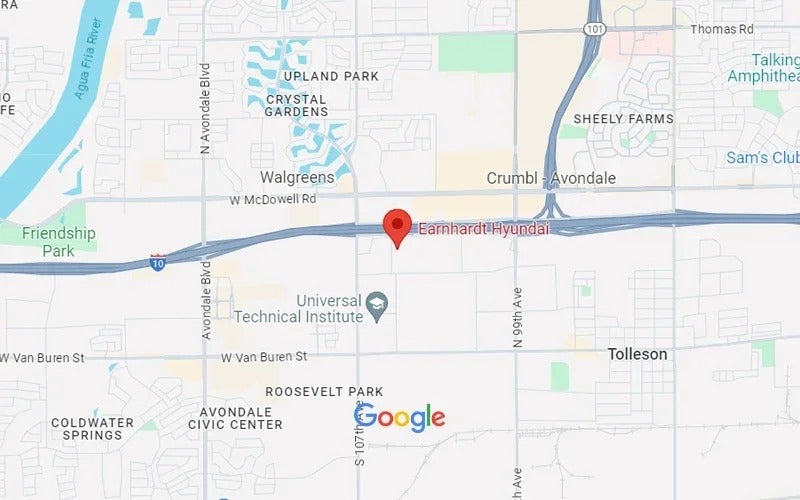
10401 W Papago Fwy
Avondale, AZ 85323
Phone
- Sales 623-220-4141
- Service 623-220-4150
- Parts 623-220-4152
| Monday | 8:00AM - 9:00PM |
| Tuesday | 8:00AM - 9:00PM |
| Wednesday | 8:00AM - 9:00PM |
| Thursday | 8:00AM - 9:00PM |
| Friday | 8:00AM - 9:00PM |
| Saturday | 8:00AM - 8:00PM |
| Sunday | 10:00AM - 6:00PM |
| Monday | Closed |
| Tuesday | 7:00AM - 6:00PM |
| Wednesday | 7:00AM - 6:00PM |
| Thursday | 7:00AM - 6:00PM |
| Friday | 7:00AM - 6:00PM |
| Saturday | 7:00AM - 4:00PM |
| Sunday | Closed |
| Monday | Closed |
| Tuesday | 7:00AM - 6:00PM |
| Wednesday | 7:00AM - 6:00PM |
| Thursday | 7:00AM - 6:00PM |
| Friday | 7:00AM - 6:00PM |
| Saturday | 7:00AM - 4:00PM |
| Sunday | Closed |